Engineering for our Life: “Unlock the Smart Classroom” group comes together in Tbilisi
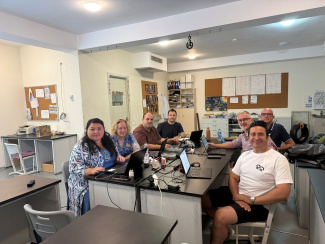
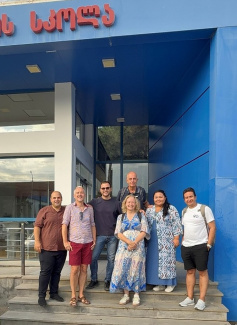
From 4 to 6 August 2026, members of the “Unlock the Smart Classroom” group met at Millennium School in Tbilisi, Georgia, for an in-person working meeting within the Science on Stage project “Engineering for our Life.” The meeting brought together participants from Ireland, Kazakhstan, Serbia, Türkiye, Greece and Georgia, as well as one of the group’s facilitators from Italy. The main goal was to move from separate ideas, prototypes and draft worksheets towards an integrated, tested and classroom-ready smart-classroom learning package.
The following report was written by group member Giorgi Nebieridze:
We began by reviewing the progress made on the different parts of the project and agreeing on a common framework connecting classroom environmental conditions with student comfort, alertness and learning. We then worked hands-on with activities for monitoring CO₂, sound, light, temperature and humidity. We assembled and tested different sensor setups, compared their performance and discussed technical issues such as data accuracy, reliability and code stability.
Alongside the technical work, we presented and peer-reviewed our draft worksheets. We discussed how to make their structure and instructions clearer and more consistent and considered safety guidance, data-recording sections and teacher notes. We also worked on adaptations for younger learners, including unplugged and play-based activities, and discussed how to make some tasks more open-ended so that students can choose variables, plan measurements and develop their own engineering or coding solutions.
The atmosphere throughout the meeting was open, friendly and highly collaborative. Everyone contributed their own experience and ideas, and we worked together not only on improving the educational materials but also on solving practical technical problems that emerged during the prototyping process.
One of the highlights of the meeting was overcoming a technical challenge together. At one point, we struggled to connect one of the sensors correctly to the microcontroller and get the system working. Instead of approaching the problem individually, we discussed possible causes, checked the wiring and code, and tested different solutions together. Eventually, we managed to solve the problem and successfully operate the sensor. This experience demonstrated the engineering process in practice: encountering a problem, troubleshooting, learning from one another and working together to find a solution. In many ways, it reflected the collaborative spirit of the “Engineering for our Life” project itself.
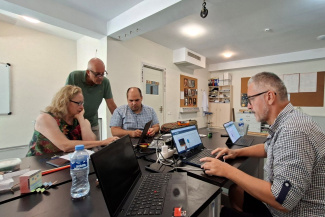
Another important part of the meeting was documenting our practical work. We took photographs of the wiring, sensor connections and practical setups so that these images can later be incorporated into the student worksheets and teacher guides. This visual documentation will help make the activities clearer and easier for other teachers and students to reproduce.
A key takeaway from the meeting was how much progress can be made when different perspectives and areas of experience are brought together. Working face-to-face allowed us to test ideas immediately, identify problems that were less obvious during online collaboration, and refine both the technical and educational aspects of the project.
Our next steps are to complete the remaining revisions of the worksheets and teacher guides, finalise the visual documentation, review the materials for scientific accuracy, age appropriateness, safety and feasibility, and continue refining the activities based on feedback from our facilitators. The Tbilisi meeting brought the different parts of our work much closer together and gave us a clear direction for the next stage of the project.
Share this page