Workshop: XR Smart Glasses and Artificial Intelligence – The Future of Learning Has Already Begun
Technology is transforming the way we learn, explore, and acquire new knowledge. One of the most exciting innovations in education is the use of XR (Extended Reality) smart glasses, which, combined with Artificial Intelligence (AI), provide an entirely new learning experience. By integrating Augmented Reality (AR), Virtual Reality (VR), and Mixed Reality (MR), students can learn through interaction, simulations, and hands-on activities, significantly improving their understanding of complex concepts while increasing engagement and motivation.
The application of XR smart glasses is particularly valuable in fields such as robotics, programming, electronics, mechatronics, engineering, medicine, architecture, and natural sciences. During practical activities, students can receive step-by-step visual instructions, interact with 3D models, perform complex tasks with the support of AI assistants, and learn through realistic simulations without risk or unnecessary costs. This approach transforms theory into practice, making learning more engaging, effective, and personalised to each student's needs.
In robotics and programming, XR smart glasses enable students to visualise robot operations, analyse program code in real time, test different scenarios, and solve problems with the assistance of intelligent AI recommendations. This innovative approach fosters logical thinking, creativity, teamwork, and problem-solving skills—competencies that are among the most sought-after in today's labour market.
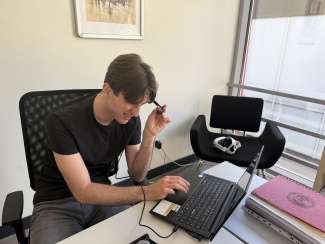
At the Information Technology High School (ITHS), a workshop dedicated to the application of XR smart glasses and Artificial Intelligence in education was successfully organised. During the workshop, teachers and students had the opportunity to explore the educational potential of these cutting-edge technologies. Through practical demonstrations, participants experienced how XR devices can enhance teaching and learning, enable interactive exercises, and seamlessly connect the digital and physical worlds.
The workshop clearly demonstrated that the integration of XR technology with Artificial Intelligence represents an important step toward the modernisation of education. Students showed great enthusiasm for this innovative learning approach, recognising its potential to make education more interactive, accessible, and closely aligned with the technologies they will encounter in their future careers.
By investing in innovative technologies such as XR smart glasses and AI-powered solutions, educational institutions create learning environments that foster digital competencies, critical thinking, and practical skills essential for the challenges of the 21st century. Workshops like this represent an important step toward the future of education—one in which knowledge is acquired not only through reading and listening, but also through experience, exploration, and meaningful interaction.
Report: Andrijana Vasic
Share this page