Quantum Computing in the Classroom: Insights from the Materials Launch in Berlin
How can a complex topic like quantum computing be taught in a way that is both understandable and practically relevant for the classroom? This question was at the heart of an international project by Science on Stage Germany—one that provided compelling answers on June 19, 2026, at the KiezLab in Berlin.
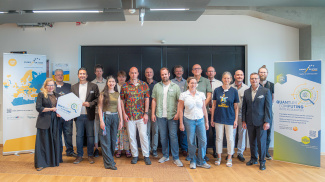
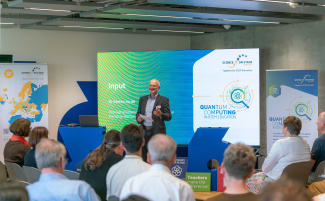
At the launch event, the new teaching materials on “Quantum Computing in STEM Education” were presented to the public for the first time. Developed by teachers from across Europe, the materials aim to introduce students to one of the key technologies of the future at an early stage.
Opening with perspectives from research and industry
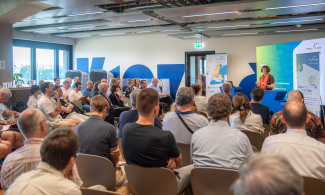
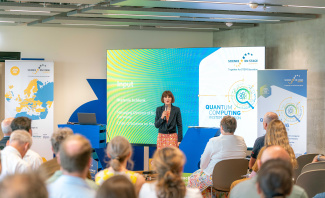
The event was opened by Dr. Heike Riel, IBM Fellow and President of the German Physical Society. In her keynote, she emphasized the central role quantum computing is expected to play in driving future innovation and value creation—and highlighted the importance of integrating these developments into education today.
Dr. Stefan Jorda, Managing Director of the Wilhelm and Else Heraeus Foundation, also addressed the participants. The foundation provided significant support for the project and made the development of the materials possible.
Materials developed by teachers, for teachers
The focus of the event was on the newly developed teaching materials themselves. Created as part of an international collaboration, they are specifically designed for use in secondary school physics, mathematics, and computer science classes.
The content ranges from fundamental concepts of quantum mechanics to introductory quantum algorithms. However, the materials go beyond subject knowledge: they also foster analytical and critical thinking, teamwork, and problem-solving skills—key competencies for a world increasingly shaped by technology.
As Dr. Jörg Gutschank, initiator of the project and Chair of Science on Stage Germany, emphasized, the goal extends beyond knowledge transfer: “to bring quantum technologies into general education and prepare students to engage with—and actively shape—a future increasingly influenced by them.”
Interactive and hands-on: workshops and exchange
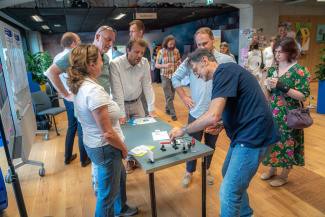
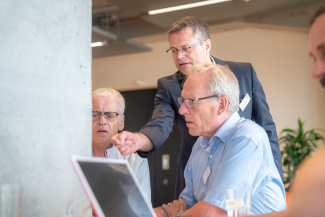
In addition to presentations, the event offered numerous opportunities for participants to engage directly with the materials. Four interactive workshops were particularly well received, allowing attendees to test selected teaching units themselves. These sessions demonstrated how abstract concepts can be made tangible through hands-on approaches.
The programme was complemented by project stands, where participating teachers shared insights into their work and invited discussion. In this way, the event not only showcased the project’s outcomes but also created space for exchange, networking, and dialogue.
A project with a European perspective
The project was supported from a didactic perspective by experts in the field. The international collaboration, combined with the close integration of subject expertise and pedagogy, is clearly reflected in the quality and practical relevance of the materials.
With their release, however, the project is far from complete. In the coming months, the materials will be disseminated across Europe through training courses, webinars, workshops, and conferences. The aim is to support as many teachers as possible in integrating quantum computing into their classrooms.
Materials now available
The teaching materials are now available free of charge and can be directly implemented in the classroom. They provide educators with concrete tools to make a challenging future topic both accessible and engaging. Find them here.
Share this page