Modelling Quantum Entanglement using Boxes

Overview
Overview
Keywords: Quantum state, quantum measurement, quantum entanglement
Age group: 16-19
Required knowledge/skills: no prior knowledge required
Time frame: 45-60 minutes
Author: Elena Poncela Blanco (ES)

Required materials
- 4 boxes (10 cm x 8 cm x 6 cm)
- Post-its
- Pencils
- Images of shoes
- Glue
- Scissors
Tasks for the students
You need to prepare four boxes. In each box, place an image of a shoe. For example, in box no. 1 you place an image of a left tennis shoe, and in box no. 2 the right shoe of the same tennis shoe model, so that the images in both boxes form a complete pair of tennis shoes.
Similarly, place an image of a left boot in box no. 3 and the right boot in box no. 4. On top of the lids, place an image of the corresponding pair. Students can see the image on the lid of each box, but the boxes should be closed, so they do not know whether they will be given a right or left tennis shoe (or boot).
- Give one box to each student. Remember that the boxes should be closed.
- Ask the students to go to different places in the school (far apart from each other).
- Their objective is to find out to which box they are entangled with and the outcome of “measuring” i.e. checking the content of the boxes. For example, if my box has an image of a pair of boots on top of its lid, I can conclude that my box is entangled with the other one with the same image. If I open my box (which corresponds to a measurement), and I have the left boot, I automatically know that the other box contains the right boot. Therefore, there is no need to measure the other box to know what is inside.
- While students are apart from each other in different places, they should write on a post-it note what is in their own box and what is in the “entangled box”. They know the outcome of a measurement without carrying it out.
- Finally, students come back to the classroom, share their findings and open their boxes in front of the class, to prove that their findings are correct.
To conclude this activity, the teacher has to explain the difference between our shoe box experiment, the state of a qubit and what measuring implies: The right shoe was always the right one, before and after “measuring” it, but when we perform a measurement on a qubit, its state collapses to a certain state. (See Basics of Quantum Physics)
You can carry out this activity with as many boxes as you wish, depending on the number of students in your class. Each student should have one box.
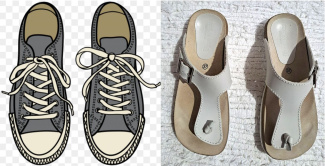
Fig. 1: Examples of images of shoe pairs
Share this page